|












 Foxton Connections
PNG Connections
Rootsweb Database

| | Interesting connections and partnerships between the Bell, Armstrong,
Sutherland, Calvert and Stewart families become more evident when their
residences and properties are studied.
|
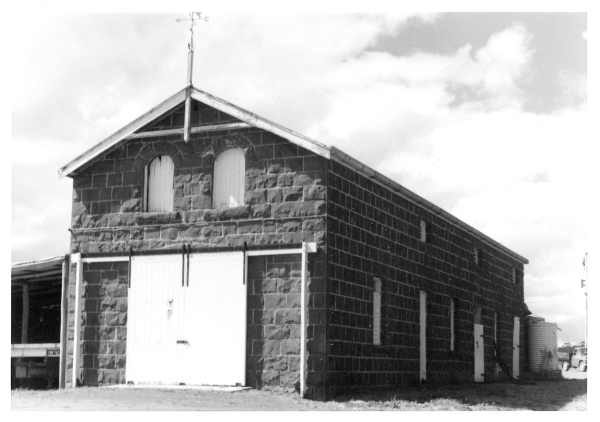
Warrambine,
Shelford (Warrambeen)
The original lease name was Warrambine, but the name
changed to Warrambeen.
|
Geelong area. It was originally leased by
John Bell in 1854. It was
4 miles NW of Shelford. Neighbouring properties were Golf Hill, Watch Hill
and Mt. Mercer. See Map. Previous lessees were Prentice 1837, Derwent Co.1841,
Major Mercer 1842, John Thomson and William Thomson 1844, Alex Cunningham
1852. The lease was cancelled in August 1864.
Two of Alexander and Betsy
Armstrong's children were born here - William Armstrong in 1864
d.1865, and George Armstrong in.1868.
Two of the children of Lewis and Mary
Ann Bell (nee Armstrong) were born here- George Bell 1882, and Margaretta Jean Bell (Jean) in 1891.
Alexander
Armstrong originally managed the property for John Bell, then
purchased it and Watch Hill. He lived there until his death in 1890.
Visit
Warrambeen today.
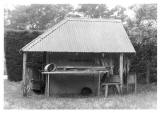 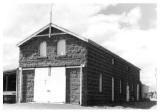 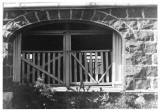 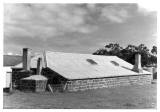
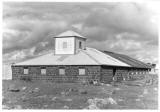 View
images at
http://www.slv.vic.gov.au/catalogues/index.html View
images at
http://www.slv.vic.gov.au/catalogues/index.html
Search for "Warrambine" in Pictures Catalogue. |
| Irrewarra |
Geelong area. John Bell had a joint lease of Irrewarra with
John Calvert in 1842. See Map. |
|
The
Leigh |
The former Shire of Leigh includes the following places:
Corindhap, Dereel, Doroq, Hesse, Inverleigh, Mount Mercer, Shelford,
Teesdale, Warrambeen, Werneth and Wingeel. Many of these recur throughout
the Bell and Armstrong families' histories.
Nine of the children of Alexander
and Betsy Armstrong were born at "The Leigh" 1861-1880. The other two
children were born at Warrambeen.
Alexander Armstrong Stewart,
son of Jean Armstrong and Rev. Alex.
Stewart, was born there in 1885.
Gladys Bell, daughter of John
Bell and Anne Russell was born at The Leigh in 1889.
"The Leigh" of the 1860's
was the area around Shelford.
The
"Leigh Road" later became known as Bannockburn. |
|
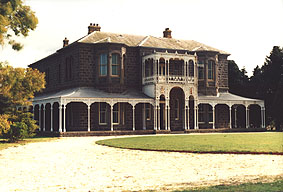
Morongo, Bell Post Hill
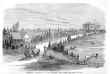 Click on picture for large view
|
Ballarat Road, Geelong. Home of John
Calvert 1811-1869 - a neighbour to John Bell at Bell Park Mrs.
John Bell (see below) is recorded as living her in 1888.
LaTrobe
Library Pictures Catalogue
Visit Morongo today.
|
|
Bell Park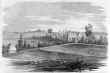 Click
on picture for large view Click
on picture for large view
|
Geelong area. Home of "Big John" Bell
1821-1867
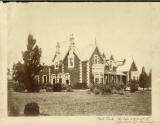
More information
here
State
Library of Victoria Pictures Catalogue
Visit Bell Park today
|
|
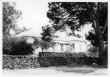
Deer Park Mt. Derrimut
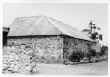
|
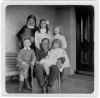
West of Melbourne, North of
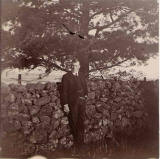
Laverton, was the home of the Howatson family. The photo of Lewis Bell (b.1853) was taken here. His daughter, Mary Calvert
Bell was born here on 02.05.1898.
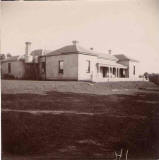
James Howatson purchased the property from Septimus and Richard Morton,
who established it as a pedigree Shorthorn cattle property from 1850 to
1875. James Howatson built the present homestead, laid out the garden and
planted the trees on the north eastern slopes of the hill. It remained a
pastoral property until sold by the trustees of the Howatson Estate to
Beresford Cole in 1944.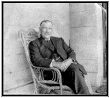
 More
information about the Howatson family More
information about the Howatson family
Pictures of Woolbrook, Teesdale, held at National Library Archives
Pictures of Deer
Park now The University of Melbourne now uses
the property as part of its Faculty of Agriculture. It is known as
the Mount Derrimut Field Station.
|
| Watch Hill / Pollock's
Station |
Geelong area. Leased at various times by John
Bell and John Calvert between 1842 - 1856. Purchased by Alexander
Armstrong from John Bell. See
Map. |
| Burnside |
Near the Leigh Road, Geelong. The Grant and Polwarth Coursing Club
met at the Burnside estate. A newspaper cutting from 1878, states that
Lewis Bell was a young newcomer, assisting his uncle, James Bell of
Woolbrook, with the dogs.
Visit the Burnside Estate today
|
| Woolbrook,
Teesdale |
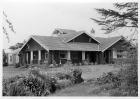
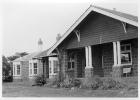
Geelong area -
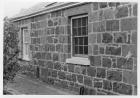
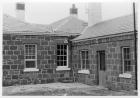
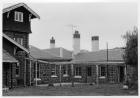
Teesdale. The home of James
Bell, editor "Geelong Advertiser", brother of John Bell of
Bell Park and Robert Lewis Bell of Mt. Mercer, uncle of Lewis Bell(b.1853)
of Booligal.
Betsy
Sutherland / Thompson married Alexander Armstrong at Woolbrook in 1860.
View images at
http://www.slv.vic.gov.au/jcollins/inter/38904.shtml
|
|
Barwon Park,
Winchelsea
|
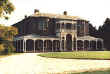
A home built by Thomas Austin in 1869, believed to be the
property where some of the first rabbits were introduced to Australia. The
Duke of Edinburgh visited the property in 1868, and the rabbits provided a
plentiful day's sport. There is no relationship to the family here,
however the close proximity of Barwon Park to many other Geelong
properties is of interest.
See
Map.
Visit Barwon Park
today
|
| Sleatbank,
Hamilton, Victoria |
Grazing property owned by Alexander
Armstrong, nephew of Mary Ann Bell and Jean
Stewart. He retired to Toorak and the property was managed by Bob Bell
until its sale in the 1970's.
See Map. |
|
Killearnan,
Old Killearnan and Burnswark were three Melbourne homes
belonging to either the Armstrongs or Lewis Bell's family. Certainly,
letters written by Betsy Armstrong come from the three houses; however one
(possibly Burnswark) was purchased to
enable Mary Ann Bell and the Bell children to live in Melbourne to attend school at Scotch
College or Presbyterian Ladies College. The older children originally
boarded in Melbourne, but this became too expensive as more of their children
reached school age. |
|
Killearnan,
Torresdale Road, Toorak.
Origins of the Name: It was possibly named after
the town, Killearnan, Rosshire, north of Inverness.
|
Two children (the 13th and 15th children) of Lewis and Mary Ann Bell
were born here - Violet Lilias Bell (Va) on 10.05.1900, and Helen Howatson
Sutherland Bell (Duckie) on 27.01.1904.
In Annie Bell's WW1 diary,
many letters from the family, including from Granny Armstrong and Mrs.
Howatson were
written from this address.
Whether the connection to the name Killearnan is an Armstrong,
Sutherland or a Stewart one, is uncertain at present. An Armstrong or
Sutherland connection is the assumption, however many Stewarts hail from
these parts. Mary Ann Bell was an Armstrong; both her parents came the
area; but her sister Jean Armstrong married a different Rev. Alexander
Stewart from the above-mentioned Stewart.
Novel:
The
Gunn of Killearnan by Dorice Nelson
Well-known and popular
ministers of the Church from the 1820's to 1850's lived in Rosshire.
- John
Kennedy (1819-1884), a Highland divine, was the fourth son of John
Kennedy, minister of Killearnan.
- A Rev.
Alexander Stewart, (1794-1847) preached in the Rosshire area. He was a
strong advocate of the Free Church of Scotland.
|
|
Old
Killearnan, Brighton
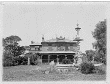 |
Melbourne home of
Betsy Armstrong. The house had spires and a large ornate fountain, and
stone lions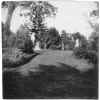 statuary. The picture
at left, shows Annie Bell sitting on the fountain
edge in 1919, after her return from WW1. statuary. The picture
at left, shows Annie Bell sitting on the fountain
edge in 1919, after her return from WW1.
According to The Argus 7 December 1929, a property of 11 acres 3 roods was
auctioned - it surrounded the "fine old residence of Killearnan", and had
frontages to Thomas and Huntley Streets and Whitmuir Road, Bentleigh. It
also states that "the land could be subdivided into seventy desirable villa
sites." |
|
Burnswark,
9 Canterbury Road, Toorak, Melbourne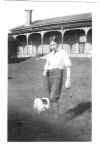
|
. The house was named after Burnswark, the Iron Age hillfort (6th century BC) situated
close to the Dumfries properties of the Bell families. It was
possibly a Melbourne home of Betsy Armstrong (b.1837) mother of MaryAnn
Bell née Armstrong(b1861). It is uncertain when Mrs. Armstrong moved
to Melbourne from Leigh, where 7 of her 9 children
were born. She was still living at Burnswark after WW1. The house is not
standing today.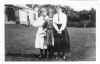
It is presumed to be the house purchased so the Bell children could
attend schools in Melbourne without boarding.
Click here for more information and
pictures about the Melbourne homes.
|
|
|
Last updated 20 October 2008 |
Last updated 1 June 2008
|











 Foxton Connections
Bell-Armstrong Connections
www.kihlstrom.com.au
Foxton Connections
Bell-Armstrong Connections
www.kihlstrom.com.au